Баннер

Предотвращение потерь RFID-технологии

Домашняя страница

Предотвращение потерь RFID-технологии

архивы
ТЕГИ
  • RFID Gates for Retail Loss Prevention: How to Reduce False Alarms and Cross-Reading
    RFID Gates for Retail Loss Prevention: How to Reduce False Alarms and Cross-Reading
    Sep 23, 2026
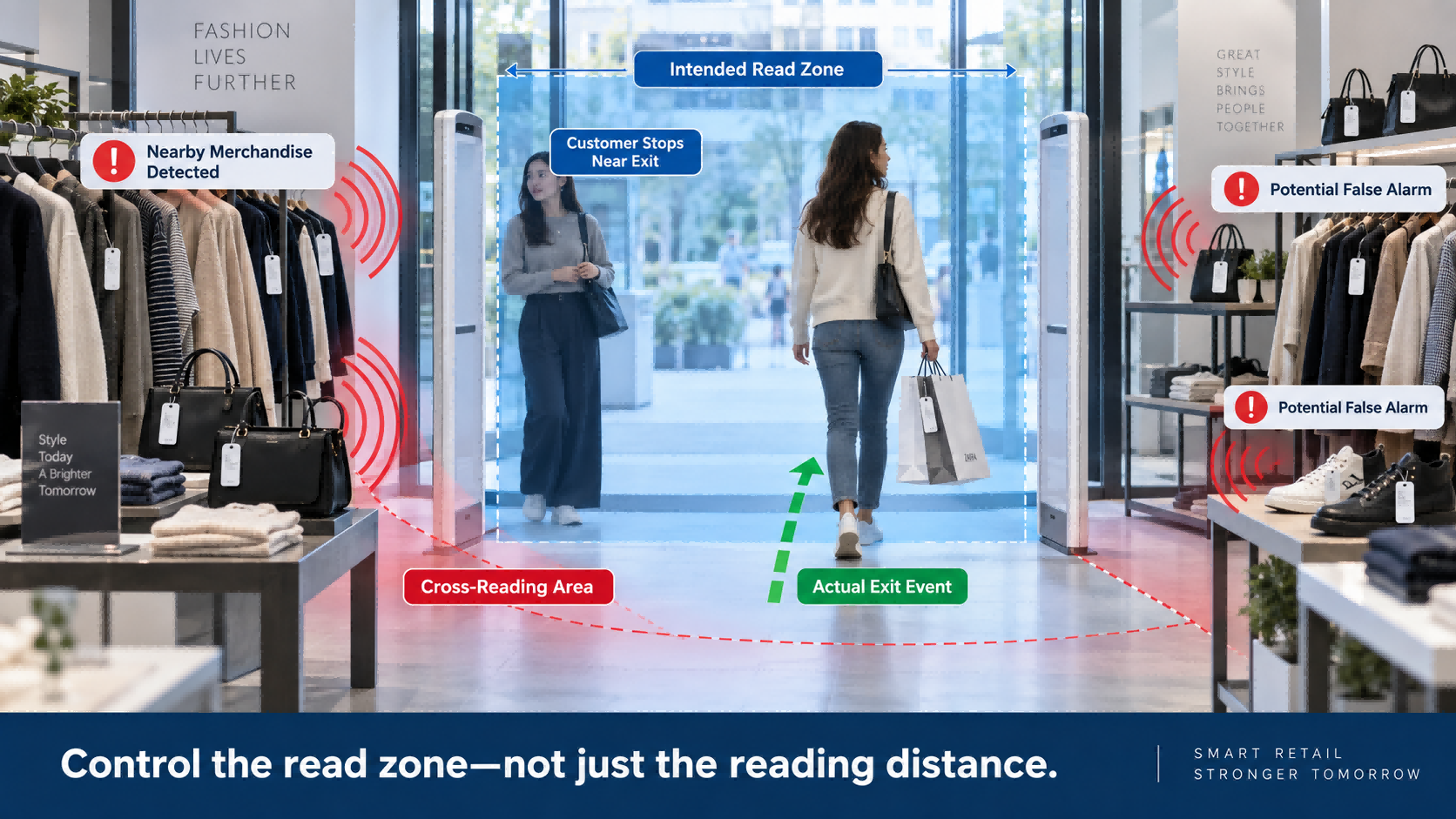
    RFID gates are widely used at retail entrances and exits to monitor tagged merchandise and support loss prevention. But a gate that reads farther is not always a better gate. In retail, one of the biggest challenges is cross-reading: the RFID system detects tags near the entrance even though those products never actually leave the store. That can lead to unnecessary alarms, staff frustration, and poor customer experience. So the real question is not: How far can the RFID gate read? It is: Can the gate monitor the right area and identify the right event?   This guide explains why false alarms happen, what RFID cross-reading means, how to reduce it, and how to choose between three common retail RFID gate designs: Traditional RFID pedestal gates Ceiling-mounted RFID gates AI trajectory-recognition RFID gates   Quick Answer   RFID gate false alarms usually happen because tags outside the intended monitoring zone are also being detected. Common causes include: Merchandise too close to the entrance RF power set too high Poorly controlled read zones Store layout changes Tag placement and orientation Product materials Customers stopping or turning near the exit For most retail stores, the solution is not simply to increase reading power. A better approach is to control the read zone, test the real store environment, and choose the gate architecture that fits the entrance. For a standard retail doorway, a traditional pedestal RFID gate is often the simplest and most cost-effective option. A store that wants a cleaner, open entrance may prefer a ceiling-mounted gate. A more complex entrance with nearby merchandise or difficult movement patterns may justify trajectory-recognition technology.     Why Retail Stores Use RFID Gates   Traditional anti-theft systems mainly answer one question: Did a protected tag pass the exit? RFID gates can add another layer of information. Because RFID tags have unique IDs, the system can potentially know: Which tag was detected When it was detected Whether it matches an authorized or restricted rule Whether an alarm condition should be triggered This makes RFID useful not only for anti-theft alarms, but also for more controlled item-level event management. The value comes from combining: RFID Identification + Read-Zone Control + Alarm Logic   Why Do RFID Gates Produce False Alarms?   False alarms usually come from the interaction between the RFID gate, merchandise, store layout, tags, and system settings.   Merchandise Is Too Close to the Entrance This is one of the most common retail scenarios. A clothing rack, shoe display, or handbag shelf may be positioned close to the doorway. Those products are still inside the store, but their RFID tags may enter the reader's effective range. If the gate treats every detected tag as an exit event, false alarms become more likely.   RF Power Is Set Too High More power does not automatically mean better performance. If RF power is increased too much, the reader may detect merchandise farther inside the store. That can make the read zone much larger than the actual passage. For retail loss prevention, a controlled zone is often more useful than the longest possible read range. A good principle is: Read the passage, not the whole store.   Store Layout, Tag Placement and Product Materials Retail stores change frequently. Racks move. Promotional displays are added. Products may be placed closer to the entrance. At the same time, RFID performance can change depending on: Tag orientation Tag placement Product material Packaging Metal components Liquids or dense materials This is why an RFID gate should always be tested using the actual merchandise and tags used in the store.   What Is RFID Cross-Reading?   RFID cross-reading occurs when a reader detects tags outside the intended monitoring area. Imagine a customer walking through the exit with one tagged jacket. At the same time, five other tagged garments are hanging on a rack just inside the store. The gate should ideally identify the jacket moving through the doorway. If it also reads the five garments that never moved, cross-reading is happening. This is one of RFID's strengths and weaknesses at the same time. RFID does not require direct line-of-sight, which makes it excellent for inventory counting. But at a store entrance, the read zone has no visible physical boundary. That invisible RF boundary has to be controlled carefully.   Three Types of RFID Gates for Retail   There is no single gate design that fits every retail environment. The best choice depends on entrance width, merchandise placement, store design, and the level of movement recognition required.   Type 1: Traditional RFID Pedestal Gate A traditional RFID pedestal gate uses floor-standing units installed on one or both sides of the entrance. This is still the most common and practical RFID gate architecture for many retail stores.     Why Pedestal Gates Are Still Widely Used For a standard entrance with a stable layout and enough distance between merchandise and the doorway, a conventional pedestal gate can be: simple to understand mature in design easy to deploy cost-effective suitable for sound-and-light alarm workflows compatible with item-level RFID identification For many stores, this is all that is needed. Typical Applications Pedestal RFID gates are commonly used in: Apparel stores Footwear stores Bag and accessory stores Libraries Asset rooms Controlled exits What Needs Attention The main challenge is controlling the read zone. Deployment typically needs to consider: Entrance width Antenna position RF power Merchandise distance Tag performance Store layout If merchandise is placed too close to the gate, cross-reading risk can increase. Pedestal units also occupy floor space on both sides of the entrance, which may matter for stores that want a more open visual design.   Type 2: Ceiling-Mounted RFID Gate A ceiling-mounted RFID gate moves the reader and antenna structure above the passage. Instead of using side-mounted pedestal units, the hardware is installed overhead. Main Advantage: A Cleaner Entrance This design can be useful when: Floor space is limited Store aesthetics matter A wider open entrance is preferred Side gate panels are undesirable The physical entrance remains more open. Important Distinction Ceiling-mounted does not automatically mean AI-powered. A conventional ceiling-mounted RFID gate still depends on: Installation height Antenna coverage Entrance width RF power Tag orientation Merchandise position Onsite adjustment Ceiling-mounted describes the installation structure. It does not necessarily describe how the system understands movement.   Type 3: AI Trajectory-Recognition RFID Gate Trajectory-recognition gates add movement analysis on top of RFID detection. Instead of relying mainly on whether a tag is present in the read zone, the system analyzes how the tag moves through the monitored area. This type becomes more useful when: Merchandise is close to the entrance Customers often stop or turn near the exit Simultaneous entry and exit is common Cross-reading is difficult to control The entrance is relatively wide Repeated onsite tuning is undesirable This does not mean every store needs AI trajectory recognition. For a standard, stable entrance, a conventional pedestal gate may remain the better and more economical choice.   Traditional Pedestal vs Ceiling-Mounted vs AI RFID Gate   Feature Traditional Pedestal Gate Ceiling-Mounted Gate AI Trajectory-Recognition Gate Installation Floor-standing Ceiling-mounted Usually ceiling-mounted Floor Space Required Not required Not required RFID Detection Yes Yes Yes Sound/Light Alarm Common Model-dependent Common Entry/Exit Judgment Configuration-based Configuration-based Movement-based Onsite Tuning Usually required Usually required Usually reduced Cross-Reading Control RF zone adjustment Coverage adjustment Movement analysis Best For Standard retail entrances Open-design entrances Complex dynamic entrances   How to Reduce False Alarms and Cross-Reading   Good hardware matters, but deployment quality matters just as much. 1. Keep the Read Zone Focused Do not optimize for maximum reading distance unless the application requires it. The target should be the passage itself. 2. Avoid Excessive RF Power Too much power can make the system read merchandise that is not part of the actual exit event. Power should match the real doorway and product environment. 3. Test Merchandise Near the Entrance Do not test the gate in an empty doorway. Place products where they will actually be displayed. Then check whether nearby static tags are being detected. 4. Test Real Customer Movement Testing should include: Walking in Walking out Stopping near the doorway Turning around Moving quickly Carrying several items Passing left, center, and right A single straight-line test is not enough. 5. Use the Actual Tags and Products Testing should use the same: RFID tag tag placement merchandise packaging product materials planned for deployment. 6. Configure Appropriate Alarm Logic If the gate connects to retail software, alarm rules can become more precise. Depending on the system, the gate may use: whitelist rules blacklist rules authorization status sales status EPC filtering This is better than treating every RFID read as the same event.   Common RFID Gate Selection Mistakes   A large number of RFID gate problems begin before installation. They begin during product selection. Mistake 1: Choosing by Maximum Read Distance A longer reading range sounds attractive, but for retail loss prevention it can increase cross-reading. The best gate is not the one that reads the farthest. It is the one that reads the correct zone.   Mistake 2: Ignoring Merchandise Placement If clothing racks or product displays are close to the entrance, this should be considered before the gate is selected. Do not assume the store layout will remain empty around the doorway.   Mistake 3: Testing Only One Tag A single tag in an open doorway does not represent a real retail environment. Test multiple items, real products, different tag orientations, and real customer movement.   Mistake 4: Forgetting Software Integration The gate may detect a tag correctly, but the alarm logic still depends on what the system knows about that tag. If the project requires: paid vs unpaid status authorized vs restricted items whitelist / blacklist logic then software integration should be considered early.   Mistake 5: Assuming the Most Advanced Gate Is Always Better A standard pedestal gate may be completely suitable for a normal store entrance. Do not add complexity where it is not needed. The right gate is the one that matches the environment and workflow.   Which RFID Gate Is Right for Your Store?   Choose a Traditional Pedestal RFID Gate If: The entrance is standard in width Floor-standing hardware is acceptable Merchandise can stay a reasonable distance from the gate The store layout is relatively stable Cost and mature deployment matter For many retail stores, this is the best starting point.   Choose a Ceiling-Mounted RFID Gate If: You want a visually open entrance Floor space is limited Side gate panels are undesirable Store appearance is important The key question is whether the RF monitoring zone can still be controlled reliably.   Consider a Trajectory-Recognition Gate If: Merchandise is close to the entrance Customers frequently stop or turn near the exit Cross-reading remains difficult after normal tuning The entrance is wide Simultaneous entry and exit happens often The project needs less repeated onsite adjustment This is where movement-based recognition provides more value.   How Far Should Merchandise Be from an RFID Gate?   There is no universal distance. The correct distance depends on: Antenna design RF power Tag type Tag orientation Product material Entrance width Gate architecture Store layout The right distance should be confirmed through real onsite testing. This is also why blindly copying another store's RFID gate settings is not recommended. Two entrances that look similar may perform differently.   Do RFID Gates Need Retail Software Integration?   Not every project requires deep integration. But if the store wants the gate to make more intelligent decisions, software becomes important. A typical workflow may look like: RFID Gate Detects Tag → System Checks Tag Status → Authorized or Restricted? → Record Event / Trigger Alarm For simple anti-theft applications, the configuration may remain relatively basic. For stores that want paid/unpaid status, detailed event records, or more advanced alarm rules, software integration becomes more important.   Questions to Ask Before Buying an RFID Gate   Before comparing products, clarify: 1. How wide is the entrance? 2. How close is merchandise to the doorway? 3. What RFID tags will be used? 4. Which products are being tagged? 5. Is sound and light alarm required? 6. Is whitelist or blacklist logic required? 7. Do you need entry and exit direction recognition? 8. Is floor-standing hardware acceptable? 9. Does the gate need to connect with POS or retail software? 10. How much onsite tuning is acceptable? 11. Does the store layout change frequently? 12. Will multiple tagged items pass at the same time? These questions are usually more useful than simply comparing maximum reading range.   FYJ RFID Gate Options   FYJ provides different RFID gate architectures for retail and controlled-entry applications, including: Traditional RFID pedestal gates Ceiling-mounted RFID gates AI trajectory-recognition RFID gates The appropriate configuration depends on: entrance width product placement tag type alarm requirements store layout software integration expected movement patterns For many standard retail entrances, a conventional pedestal RFID gate remains a practical and economical choice. More complex environments may benefit from ceiling-mounted or trajectory-recognition designs. The goal is not to use the most advanced gate. It is to use the gate that best matches the real entrance.   FAQ   What causes RFID gate false alarms? Common causes include nearby merchandise, oversized read zones, excessive RF power, changing store layouts, tag orientation, product materials, and cross-reading outside the intended passage. What is RFID cross-reading? RFID cross-reading happens when the reader detects tags outside the area it is supposed to monitor. How can RFID cross-reading be reduced? Typical methods include reducing RF power, controlling antenna coverage, testing merchandise near the entrance, using appropriate tags, and choosing a gate architecture that matches the store. What is the difference between a pedestal and ceiling-mounted RFID gate? A pedestal gate uses floor-standing units on the sides of the entrance. A ceiling-mounted gate installs RFID hardware above the passage and keeps the floor area open. Is every ceiling-mounted RFID gate AI-powered? No. Ceiling-mounted refers to installation structure. AI trajectory-recognition adds movement analysis on top of RFID detection. Do RFID gates require onsite tuning? Many conventional RFID gates require onsite adjustment of RF power, antenna coverage, and read zones. The amount of tuning depends on the hardware and environment. Can RFID gates identify unpaid merchandise? The RFID gate can identify individual tags. Determining whether an item is unpaid depends on the system's alarm logic and integration with retail or POS software. How far should merchandise be from an RFID gate? There is no fixed distance that works for every store. It should be determined through testing using the actual gate, tags, products, and entrance layout.   Conclusion   RFID loss prevention is not mainly about how far a gate can read. It is about controlling where the system reads and deciding which events matter. For a standard retail entrance, a traditional pedestal RFID gate may be the simplest and most economical choice. For stores that need a cleaner, more open entrance, ceiling-mounted RFID gates offer another option. For more complex environments with nearby merchandise, wide passages, or difficult movement patterns, trajectory-recognition gates can add another layer of control. Start with the entrance. Look at merchandise placement, customer movement, tag type, alarm requirements, and software integration. Then choose the RFID gate. Not the other way around.
    ЧИТАТЬ ДАЛЕЕ
  • RFID for Fashion Retail: How Clothing Stores Can Improve Inventory, Checkout, Product Finding and Loss Prevention
    RFID for Fashion Retail: How Clothing Stores Can Improve Inventory, Checkout, Product Finding and Loss Prevention
    Sep 18, 2026
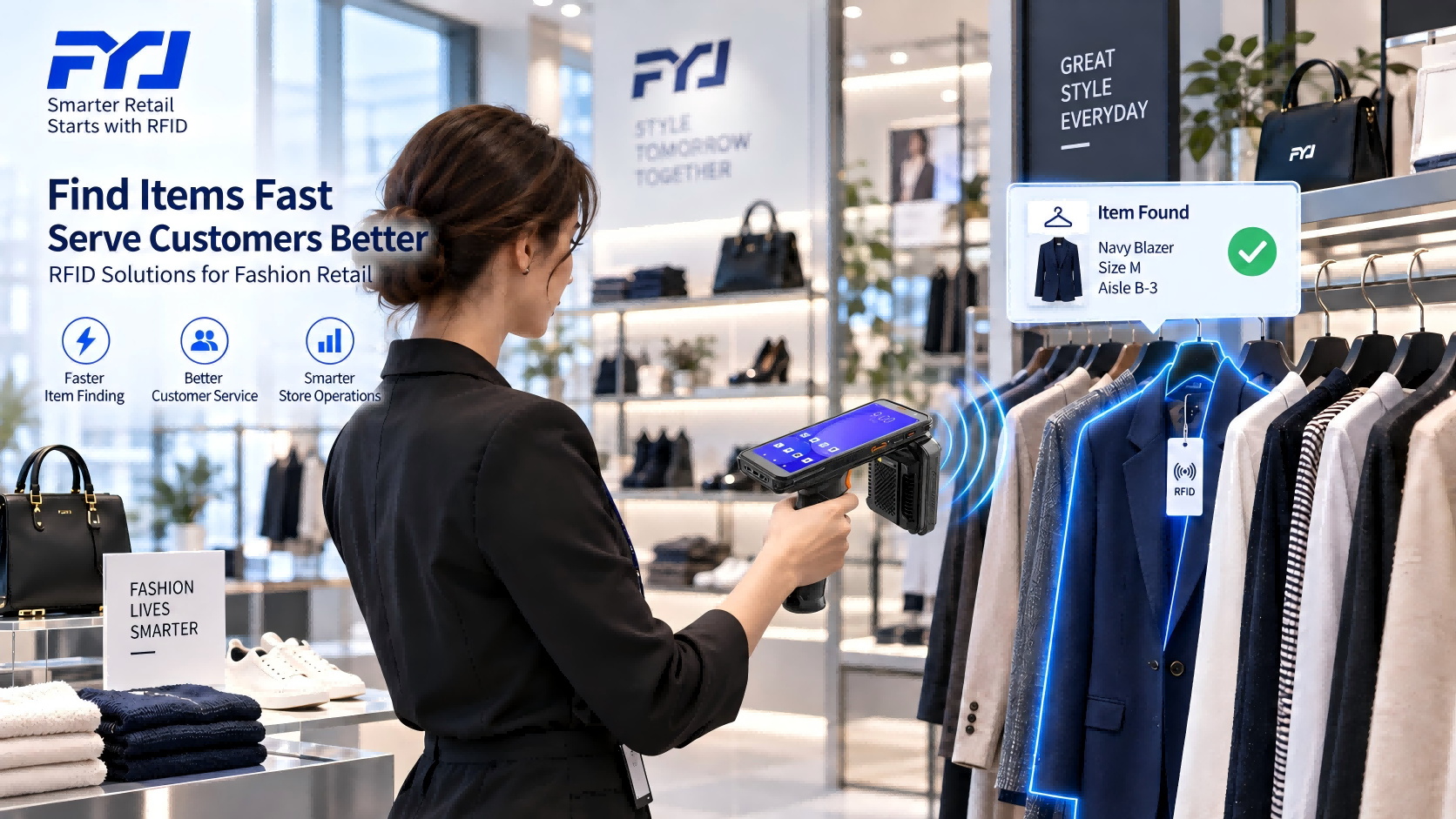
    Fashion retail moves fast. SKUs keep increasing, product styles change quickly, and customers expect stores to know exactly what is available, where it is, and how quickly it can be purchased. For many clothing retailers, however, daily operations still depend heavily on manual counting, barcode scanning, spreadsheets, and staff experience. That creates a familiar set of problems: Inventory records do not match physical stock Stocktaking takes too long Checkout slows down during peak periods Products go missing without a clear trace Staff spend too much time searching for sizes or styles Store and warehouse data are not always synchronized RFID offers a different way to manage these workflows. By assigning each item a unique RFID identity and combining tags with handheld readers, RFID checkout devices, access control equipment, and retail management software, stores can manage inventory and item movement more efficiently across the full retail process.   Quick Answer   An RFID retail system can help fashion stores improve five areas: Inventory counting — batch-read many tagged items instead of scanning one by one Checkout — read multiple products at once Product finding — use handheld RFID signal strength to locate a specific item Loss prevention — monitor tagged items at store exits Traceability — keep item movement and sales records connected in one system For fashion retailers with many SKUs, multiple stores, or frequent inventory movement, these improvements can significantly reduce manual work and improve stock visibility.   Why Fashion Retail Stores Struggle with Inventory Management   Fashion retail is more difficult to manage than it may look from the customer side.   A store may carry hundreds or thousands of combinations across: style color size season brand location Once inventory is distributed across stores, backrooms, warehouses, and online channels, small recording errors quickly become larger operational problems.   1. Inventory Data Becomes Inaccurate Many retailers still rely on manual entry or disconnected systems. When product codes, warehouse rules, or store processes are inconsistent, headquarters may not have a reliable real-time view of inventory. Typical problems include: missed inbound records missed transfer records incorrect stock adjustments delayed data updates differences between system stock and physical stock The result is simple: The system says an item exists, but staff cannot find it. Or the store appears out of stock even when the item is physically available.   2. Stocktaking Takes Too Long Traditional fashion store inventory counting is labor-intensive. When every item must be checked manually or scanned individually, a monthly or quarterly stocktake can take hours or even days. For stores with a large number of SKUs, this creates several problems: stores may need to pause normal operations employees are pulled away from customer service counting errors accumulate results become outdated quickly The more frequently inventory changes, the harder it becomes to rely on slow counting methods.   3. Checkout Becomes a Bottleneck Barcode checkout works well when the number of items is small. But during busy periods, scanning products one by one creates queues. If a customer buys several garments, each item needs to be positioned and scanned individually. This adds time at the checkout counter and increases staff workload. For high-traffic fashion stores, checkout speed can directly affect the customer experience.   4. Losses Are Difficult to Trace Retail loss does not always come from one clear source. A product may: leave the store without being properly recorded be transferred incorrectly be misplaced be entered incorrectly disappear during daily operations When the store lacks item-level movement records, it becomes difficult to identify where the difference occurred. This is especially challenging for higher-value apparel, shoes, bags, accessories, and visually similar products.   5. Finding the Right Item Takes Too Long A common retail scenario is simple: A customer likes a product but needs another size or color. The system may show that the item is in stock, but the employee still has to find it. In a crowded stockroom, that can take several minutes. The longer the customer waits, the greater the chance that the sale is lost.   How an RFID Retail Solution Changes Store Operations   FYJ’s RFID retail approach combines software and RFID hardware to give each tagged item a unique digital identity and connect that identity to daily retail workflows. A typical setup may include: RFID tags RFID handheld PDA RFID printer RFID checkout equipment RFID access control retail or inventory management software The goal is not simply to “add RFID”. The goal is to make item movement easier to identify, record, and manage.     1. Faster Inventory Counting with RFID Handhelds One of the most immediate improvements is stocktaking. With an RFID handheld PDA such as the FYJ F9850, employees do not need to scan every barcode individually. They can move along racks or shelves while the handheld reads multiple RFID tags in batches. In practice, this changes the workflow from: Find Item → Aim Scanner → Scan One by One to: Walk Through Area → Read Multiple Tags → Upload Results Inventory data can then be compared with system records and used to generate inventory reports. In FYJ retail projects, this approach has helped reduce counting time from days to hours and improve stock accuracy.     2. Faster Checkout with RFID RFID can also change the checkout process. Instead of scanning every item separately, multiple RFID-tagged products can be identified together. With an RFID self-checkout or RFID checkout device, customers or staff can place several products into the reading area. The system reads the tagged items and generates the order total. This is particularly useful when customers purchase multiple garments at once. The value is not only faster payment. It also reduces repetitive scanning work at the checkout counter.   3. Faster Product Finding with RFID Handhelds RFID handheld devices can also help employees find a specific item. If a product is recorded in the system but difficult to locate, staff can search for the item and use RFID signal strength as a guide. As the employee moves closer to the tagged item, the signal becomes stronger. This is useful for: finding a specific size finding a particular color locating a misplaced item searching stockrooms checking backroom inventory In stores where employees frequently move between the sales floor and stockroom, this can reduce customer waiting time.     4. RFID Loss Prevention at Store Exits RFID access control can help stores monitor tagged items moving through entrances and exits. When the gate is integrated with the retail management system, the system can use tag status to help distinguish normal and unauthorized product movement. For example: purchased product → normal passage restricted or unpaid product → alarm event This adds another layer of control to store operations. For retailers, the value is not only the alarm itself. The more important part is that item movement can become part of a traceable digital record.   5. Full Item Traceability RFID works best when it is connected to software. From receiving to sale, item activity can be recorded throughout the process. A typical product record may include: receiving warehouse entry transfer store arrival inventory count checkout outbound record final sale This gives management a clearer view of what happened to each product and where differences may have occurred. For multi-store retailers, that can also improve coordination between headquarters, stores, and warehouses.   Real RFID Retail Project Examples   The strongest value of RFID becomes easier to understand when looking at real store environments.   Case 1: Apparel Retail Store in Dongguan Challenge The store carried a large number of SKUs. Traditional manual stocktaking required several days, while inventory data lagged behind actual store conditions. The retailer also faced frequent stock discrepancies and pricing confusion. FYJ Solution The store implemented an FYJ RFID retail management solution to improve inventory control and daily store operations. Result Inventory counting time was reduced from several days to several hours. Inventory accuracy and physical-to-system consistency improved to 99%.   Case 2: Cross-Border Fashion Retail Operation Background A fashion retail company operated a warehouse in China together with stores and supporting warehouse operations in Thailand. The company needed to improve overseas store inventory counting, checkout speed, and inventory synchronization. FYJ Solution FYJ deployed an RFID retail management solution across the relevant inventory and store workflows. Result Inventory counting efficiency improved by 80% Checkout time was reduced by 50% Inventory data between domestic and overseas locations could be synchronized in real time For this type of business, RFID supported not only individual store efficiency but also better visibility across locations.   Case 3: Department Store Retailer in Xinjiang Challenge The customer managed a large variety of department store products. The number of SKUs was high, products were visually similar, and manual counting was difficult and error-prone. The value of some products also increased the importance of stock accuracy and loss prevention. FYJ Solution The customer implemented an FYJ RFID retail management solution. Result Stocktaking efficiency improved by more than 10× Inventory accuracy reached 99% Loss reduction improved by 9%–30% Replenishment decisions became more accurate   Which Fashion Retailers Benefit Most from RFID?   RFID is especially useful when a store has one or more of these characteristics: Retail Situation Why RFID Helps Large number of SKUs Faster batch inventory counting Frequent stock movement Better item-level visibility Multiple stores Easier inventory synchronization High checkout volume Faster multi-item identification Difficult stockroom search Faster item finding Higher-value products Better movement records and loss control Frequent stock discrepancies Better reconciliation between physical and system inventory   A very small store with limited inventory may not need a full RFID system. The value becomes clearer as inventory volume, store count, and operational complexity increase.   Barcode or RFID for Fashion Retail?   Barcode is still useful in many retail environments. The difference is mainly how items are identified. Barcode requires line-of-sight usually reads one item at a time low implementation cost suitable for simple checkout and inventory workflows RFID does not require direct line-of-sight supports batch identification supports faster stocktaking can assist with product locating can support automated entry/exit monitoring For many retailers, the decision is not necessarily “barcode or RFID only.” A hybrid setup is also possible. Barcode may continue to be used for selected workflows while RFID is introduced where batch reading or movement tracking provides more value.   What Should Retailers Check Before Deploying RFID?   Before choosing hardware, it is important to understand the store workflow. Ask: How many SKUs does each store manage? How long does a full stocktake take today? How often do stock discrepancies occur? Does the retailer operate multiple stores? Is inventory shared with an online channel? Is faster checkout important? Do employees frequently search for missing products? Is loss prevention a major concern? Does the existing POS or retail system need integration? These questions usually matter more than choosing the reader with the longest reading distance.   FYJ RFID Retail Solution   FYJ provides integrated RFID software and hardware for retail inventory and store management. Depending on the application, a project may combine: RFID tags RFID handheld PDA RFID printer RFID checkout devices RFID access control retail management software inventory management functions The solution can support workflows from receiving and inventory counting to checkout, product finding, movement monitoring, and reporting. The exact configuration should be based on the store’s actual operation rather than using the same hardware combination for every project.   FAQ   What is RFID in fashion retail? RFID in fashion retail uses RFID tags and readers to identify products without scanning each barcode individually. It can support inventory counting, checkout, product finding, movement tracking, and loss prevention. How does RFID improve stocktaking? RFID handheld readers can identify multiple tagged items in batches, allowing staff to count inventory much faster than scanning products one by one. Can RFID help employees find a missing product? Yes. An RFID handheld can use signal strength to help guide employees toward a specific tagged item. Can RFID improve checkout speed? Yes. RFID checkout devices can identify several tagged products at the same time instead of requiring individual barcode scans. Can RFID work across multiple stores? Yes. When connected to a centralized retail or inventory management platform, RFID data can support inventory visibility across different locations. Does RFID replace barcode completely? Not necessarily. Many retailers can use RFID and barcode together depending on the workflow.   Conclusion   RFID can improve fashion retail operations in ways that go beyond faster inventory counting. When tags, handheld devices, checkout equipment, access control, and software work together, retailers can gain better visibility into how products move through stores and warehouses. For fashion retailers managing many SKUs, multiple locations, frequent stock movement, or recurring inventory discrepancies, RFID can help make inventory more accurate, checkout faster, product finding easier, and store operations more traceable. The key is not simply adding RFID hardware. It is designing the RFID workflow around how the store actually operates.
    ЧИТАТЬ ДАЛЕЕ
  • Системы считывания RFID с использованием искусственного интеллекта меняют подход к предотвращению краж в розничной торговле: как технология FYJ Omni-Eye улучшает распознавание входа и выхода.
    Системы считывания RFID с использованием искусственного интеллекта меняют подход к предотвращению краж в розничной торговле: как технология FYJ Omni-Eye улучшает распознавание входа и выхода.
    Sep 11, 2026
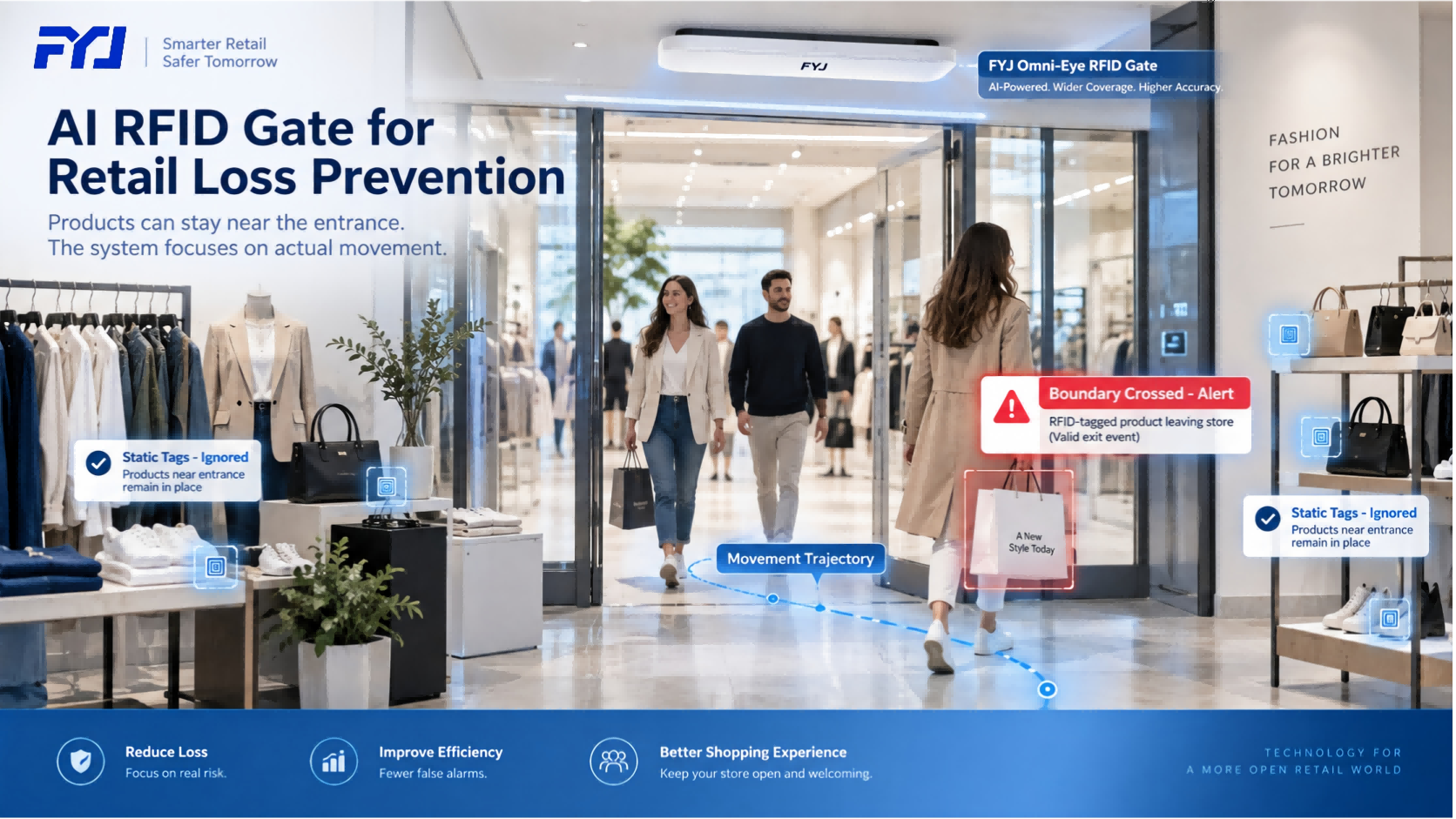
     Системы безопасности с RFID-метками используются в розничной торговле уже много лет.Традиционная логика проста: когда метка обнаруживается рядом с выходом, система решает, следует ли срабатывать сигнализация.Такой подход работает в простых условиях. Но в современных розничных магазинах ситуация усложняется.Товары размещаются ближе к входам. Покупатели могут остановиться у двери, примерить обувь или одежду, пройтись туда-обратно или нести несколько товаров одновременно. В то же время, розничные продавцы стремятся эффективно использовать каждую часть магазина, вместо того чтобы оставлять большую пустую зону вокруг RFID-ворот.Это создает проблему:Как RFID-шлагбаум может отличить метку, просто находящуюся рядом, от товара, который действительно покидает магазин?FYJ Ворота с RFID-меткой и всенаправленным обзором на основе искусственного интеллекта подходит к этой проблеме по-другому.Вместо того чтобы рассматривать каждый обнаруженный RFID-сигнал как событие, система анализирует перемещение RFID-меток в пространстве и использует распознавание траектории на основе ИИ для определения того, действительно ли объект пересек контролируемую границу.Это меняет подход к использованию RFID-технологий для контроля доступа в розничной торговле. Почему традиционные RFID-ворота могут создавать проблемы в розничных магазинах Вход в магазин редко бывает контролируемым пространством.Покупатели останавливаются, оборачиваются, рассматривают товары на полках и двигаются непредсказуемо.Товары также могут быть размещены в непосредственной близости от входа.Для обычных RFID-ворот это может создать ряд проблем:— Ценники у входа можно прочитать, даже когда товары не покидают магазин.— Статичные товары могут мешать перемещению ценников.- Через ворота может пройти несколько товаров одновременно.- Быстрое движение может затруднить идентификацию.- Планировка магазина может потребовать многократной корректировки параметров.Ложные срабатывания могут отвлекать как клиентов, так и сотрудников.Когда ложные срабатывания происходят слишком часто, персонал постепенно перестает доверять системе.Именно поэтому эффективность RFID-ворот не следует оценивать только по дальности считывания.Более важный вопрос:Может ли система определить, действительно ли помеченный объект пересек границу?  1. Входная зона может быть снова использована в качестве торговой площади. Одна из практических проблем, с которой мы часто сталкиваемся в проектах розничной торговли с использованием RFID-технологий, — это зона вокруг входа.При использовании обычных RFID-ворот розничные продавцы могут намеренно держать товары подальше от ворот, поскольку расположенные рядом метки могут создавать помехи или приводить к нежелательным считываниям.Это означает потерю ценного выставочного пространства.Система FYJ Omni-Eye RFID Gate использует анализ траектории движения и распознавание перемещений для различения товаров, остающихся внутри магазина, и товаров, фактически перемещающихся через выход.Это означает такие товары, как:- Одежда- Обувь- Сумки- Аксессуары- Другие товары с RFID-меткамиИх можно разместить ближе к входу, не полагаясь только на расстояние до считывателя для предотвращения нежелательных срабатываний сигнализации.Покупатель может стоять рядом, останавливаться, поворачиваться или перемещаться в пределах входной зоны.Важный фактор заключается не просто в том, можно ли прочитать метку.Это то, как перемещается метка.Это дает розничным продавцам больше гибкости при планировании оформления витрин и потока покупателей. 2. От «Метка обнаружена» до «Движение распознано» Традиционные системы контроля доступа на основе RFID-технологии часто в значительной степени полагаются на то, попала ли метка в зону считывания.Система Omni-Eye анализирует больше информации.Для каждой RFID-метки система может анализировать изменения в ее фазовой траектории и процессе движения, чтобы определить ее направление и положение относительно контролируемой границы.Вместо принятия решения на основе единичного сигнального события, система оценивает непрерывный процесс движения.Представьте себе разницу так:Традиционная логикаОбнаружена метка → Обработать метку → Решить, следует ли подавать сигнал тревогиЛогика, основанная на траекторииМетка обнаружена → Отслеживание движения → Анализ направления → Определение факта пересечения границы → Решение о необходимости подачи сигнала тревогиЭтот дополнительный уровень анализа движений делает систему более подходящей для сложных входных зон в торговых помещениях. 3. Контроль за перекрестным чтением становится проще. Перекрестное считывание — одна из наиболее распространенных проблем в проектах RFID.Считывающее устройство может обнаружить метки, которые физически находятся близко к входу, но не являются частью фактического события входа или выхода.Примеры включают:- Одежда выставлена ​​у входа- Товары, размещенные на соседней полке- Товары, принесенные покупателями, которые остаются внутри магазина.- Статические RFID-метки, находящиеся в пределах досягаемости считывателя.Если каждый читаемый тег рассматривается как событие выхода, избежать ненужных тревог становится сложно.RFID-ворота FYJ Omni-Eye полагаются не только на то, видна ли метка считывателю.Также учитывается, движется ли метка и как это движение меняется со временем.Таким образом, статические или не связанные с отслеживаемым объектом метки могут обрабатываться иначе, чем метки, фактически перемещающиеся по контролируемому участку.Для розничных продавцов это означает меньшее количество ситуаций, когда приходится перепроектировать планировку магазина только для того, чтобы разместить RFID-ворота. 4. Перемещение нескольких товаров одновременно — это реальный сценарий в розничной торговле. Покупатель редко берет товары по одному.Они могут уйти со следующим:- Несколько предметов одежды сложены вместе- Обувь в сумке для покупок- Множество аксессуаров- Товары частично заблокированы другими предметамиВ таких ситуациях считывание одной RFID-метки в открытой среде гораздо сложнее.RFID-ворота Omni-Eye непрерывно анализируют процесс перемещения множества меток по мере их прохождения через контролируемую зону.Это делает его подходящим для динамических сред с множеством меток, где несколько помеченных RFID-метками продуктов могут одновременно входить или выходить.Цель состоит не просто в том, чтобы максимизировать количество прочтений необработанных тегов.Цель состоит в том, чтобы связать эти данные с реальным движением.Это различие становится особенно важным в магазинах с большим скоплением людей. 5. Быстрое движение не должно означать нечеткое движение. Ещё одна проблема возникает, когда покупатели быстро проходят через вход.У системы меньше времени на сбор информации.Простая система, основанная на пороговом значении, может испытывать трудности с определением того, является ли метка:- было обнаружено лишь на короткое время,- находился недалеко от входа,— или же фактически перешли через выход.Распознавание траектории обеспечивает системе более широкий контекст.При перемещении RFID-метки изменяющиеся характеристики её сигнала создают закономерность движения.Алгоритм Omni-Eye анализирует этот паттерн для определения точки входа или выхода, а не принимает решение на основе одного изолированного считывания.Это особенно полезно в следующих случаях:- Розничные магазины с высокой проходимостью- Магазины модной одежды- Магазины обуви- Магазины сумок и аксессуаров- Оживлённые входы с частым движением покупателей. 6. Меньшая зависимость от повторной настройки на месте. Команды, работающие над проектами RFID, понимают, что установка — это лишь часть работы.Самой сложной частью может оказаться ввод в эксплуатацию.Традиционные ворота могут потребовать многократной регулировки в зависимости от:- Положение на полке- Плотность товаров- Ширина входа- Ориентация тега- Модели потока клиентов- Окружающие RFID-сигналыПереместите полку, измените оформление витрины или перепроектируйте вход, и, возможно, потребуется повторно проверить параметры.RFID-ворота FYJ Omni-Eye предназначены для снижения этой зависимости.Поскольку оценка движения основана на траектории движения метки, а не только на фиксированных пороговых значениях сигнала, система может обрабатывать большую часть логики распознавания на уровне устройства.Нынешняя конструкция Omni-Eye предназначена для развертывания по принципу «подключи и работай», без необходимости повторной настройки параметров на месте. Устройство можно установить и ввести в эксплуатацию со значительно меньшими требованиями к настройке в зависимости от условий окружающей среды.Для одного магазина это экономит время на вводе в эксплуатацию.Для розничной сети, открывающей десятки магазинов, эта разница становится гораздо более важной. 7. Почему это важно для системных интеграторов Ценность RFID-продукта определяется не только его лабораторными характеристиками.Для интеграторов важен еще один вопрос:Можно ли многократно развертывать одно и то же решение на разных площадках клиентов?Каждый розничный магазин уникален.В одном из мест вход может быть узким.Другой вариант — разместить полки рядом с дверью.В третьем случае может наблюдаться большой поток покупателей.Если каждый проект требует обширной ручной настройки, внедрение становится медленнее и дороже.Ворота, способные обрабатывать большее количество различий в окружающей среде благодаря собственной логике распознавания, упрощают стандартизированное развертывание.Это может помочь уменьшить:- Время ввода в эксплуатацию- Повторные выезды на место- Настройка параметров- Объем работ по техническому обслуживанию- Различия между вариантами развертывания в магазинахВ проектах с использованием RFID-технологий, охватывающих несколько магазинов, повторяемость результатов может быть столь же важна, как и точность считывания. 8. Edge AI позволяет принимать решения локально. RFID-ворота Omni-Eye не просто отправляют необработанные данные метки в другое место и ждут, пока другая система примет решение.Его аппаратная архитектура включает локальную обработку для анализа движения RFID-меток. Конструкция исходного кода сочетает в себе аппаратное обеспечение RFID-считывателя с обработкой данных на периферии сети с помощью ИИ, что позволяет оценивать информацию о траектории локально.Локальная обработка помогает сократить задержку между:Перемещение метки → Распознавание → Принятие решения → СигнализацияЭто особенно полезно для систем контроля доступа, где система должна реагировать, пока человек или предмет еще проходят через вход.В результате получается более совершенное периферийное устройство, а не просто точка сбора данных с помощью RFID-метки. 9. Конструкция с потолочным креплением меняет физическую планировку магазина. Многие традиционные защитные ворота с RFID-метками занимают место по обеим сторонам входа.Это может повлиять на:- Внешний вид магазина- Поток клиентов- Ширина входа- Демонстрация товара- Проектирование монтажаВъездные ворота FYJ Omni-Eye RFID имеют потолочную конструкцию.Читатель сидит над контролируемой зоной, а не рядом с ней.Для современных розничных магазинов это позволяет создать более чистый вход, при этом оборудование для RFID-мониторинга не будет мешать основному маршруту покупателей.Текущая конфигурация может быть расширена за счет дополнительных блоков Omni-Eye для обеспечения контроля на расстоянии до 6 метров, что обеспечивает большую гибкость при обустройстве более широких входных групп. 10. RFID-ворота становятся чем-то большим, чем просто противоугонными устройствами. Роль RFID-ворот меняется.Раньше главный вопрос был следующим:Был ли неоплаченный товар вывезен из магазина? Это по-прежнему важно.Но теперь розничные торговцы задают более широкие вопросы:- Какие предметы вошли или вышли?— В каком направлении они двигались?— Могут ли расположенные рядом товары оставаться на витрине, не создавая помех?— Могут ли несколько помеченных предметов перемещаться вместе?— Может ли система мониторинга входа интегрироваться с программным обеспечением для учета товаров или розничной торговли?— Можно ли использовать одну и ту же аппаратную архитектуру в нескольких магазинах?Как только RFID-ворота смогут более точно определять движение, они станут частью более крупной инфраструктуры данных для розничной торговли.Одни и те же события ввода и вывода могут потенциально поддерживать рабочие процессы, связанные с перемещением запасов, управлением магазином и мониторингом активов, при условии интеграции с соответствующей программной платформой. В каких случаях использование RFID-ворот с искусственным интеллектом наиболее целесообразно? Подход «всенаправленный взгляд» особенно актуален, когда проект соответствует одному или нескольким из следующих условий: Розничный сценарийПочему это важноТовары расположены рядом с входом.Помогает отличить статичные товары от фактического движения при выходе.Высокий поток клиентов Лучше подходит для частого перемещения вокруг входа.Несколько предметов, переносимых вместеПоддерживает динамическое распознавание нескольких тегов.Широкие входыАрхитектура потолка может обеспечивать более широкие зоны мониторинга.Несколько торговых точекСокращение объема настроек способствует стандартизации развертывания.Дизайн магазина имеет значение. Монтаж на потолке позволяет избежать установки напольных ворот.Частые ложные срабатыванияАнализ движений предоставляет больше контекста, чем простое обнаружение сигналов. Это не означает, что каждому розничному магазину автоматически необходимы ворота с RFID-метками и искусственным интеллектом.В условиях простой среды с ограниченным потоком людей и четким входом обычные RFID-ворота могут хорошо подойти.Ценность этого становится более очевидной по мере усложнения окружающей среды. Какие вопросы следует задать розничным продавцам перед выбором RFID-ворот? Прежде чем сравнивать отдельные товары, задайте себе следующие вопросы:1. Размещены ли товары у входа?Если да, то важны перекрестное чтение и фильтрация по статическим тегам.2. Какова ширина входа?Это влияет на архитектуру антенны и системы.3. Часто ли покупатели останавливаются или перемещаются возле выхода?Распознавание движений приобретает все большее значение.4. Будет ли через ворота одновременно проходить несколько товаров?Необходимо протестировать производительность при работе с несколькими тегами.5. Какой объем настройки на месте допустим?Это имеет огромное значение для развертывания сети магазинов.6. Нужно ли подключать шлюз к существующему программному обеспечению для розничной торговли или учета товаров?Оценивать аппаратное обеспечение следует в совокупности с требованиями к системной интеграции. Подход компании FYJ к мониторингу доступа в розничную торговлю с использованием RFID-технологии. В компании FYJ мы рассматриваем системы контроля доступа на основе RFID как одну из составляющих общего рабочего процесса в розничной торговле.RFID-метки, принтеры, портативные считыватели, кассовые аппараты, оборудование и программное обеспечение для контроля доступа в конечном итоге должны работать вместе.RFID-ворота Omni-Eye обеспечивают более интеллектуальный уровень распознавания движений на входе в магазин.Вместо того чтобы рассматривать каждую обнаруженную RFID-метку как потенциальный сигнал тревоги, система фокусируется на понимании следующих аспектов:Куда перемещается метка, и действительно ли она пересекла контролируемую границу?Это небольшое изменение в вопросе, но существенное изменение в том, как можно интерпретировать данные с RFID-ворот.Для розничных продавцов и системных интеграторов, работающих со сложными входными зонами, плотными витринами с товарами или развертыванием систем в нескольких магазинах, это предоставляет еще один способ улучшить мониторинг доступа с помощью RFID без необходимости проектировать весь магазин вокруг ворот. Часто задаваемые вопросы Что такое ворота с RFID-метками и искусственным интеллектом?Система контроля доступа AI RFID сочетает в себе обнаружение RFID-меток с алгоритмами, анализирующими движение меток, их траекторию или другие изменения сигнала, для принятия более обоснованных решений о входе и выходе.Чем система FYJ Omni-Eye отличается от традиционных RFID-ворот?Традиционные шлагбаумы часто в значительной степени полагаются на то, будет ли метка обнаружена в зоне считывания. Система Omni-Eye анализирует траекторию движения метки, чтобы определить, действительно ли она пересекает контролируемую границу.Можно ли размещать товары рядом с RFID-воротами?Метод распознавания на основе траектории движения разработан для более эффективного различения статических или находящихся рядом меток от товаров, фактически перемещающихся через вход, что делает организацию торгового пространства у входа более гибкой.Требуется ли настройка RFID-ворот Omni-Eye на месте?Текущая конструкция поддерживает развертывание по принципу «подключи и работай» и предназначена для сокращения количества повторных настроек параметров на месте.Может ли система распознавать несколько RFID-меток одновременно?Да. Продукт разработан для динамических сценариев распознавания нескольких меток.Подходит ли RFID-ворота только для розничной торговли?Нет. Та же технология может применяться на складах, в хранилищах активов, библиотеках, архивах и других помещениях, требующих мониторинга входа и выхода с помощью RFID-технологии. Заключение Следующее поколение RFID-ворот – это не просто считывание меток на большем расстоянии.Речь идёт о понимании того, для чего на самом деле нужны эти метки.В современном розничном магазине товар может находиться рядом с входом, не выходя из него. Покупатель может остановиться, развернуться или нести несколько товаров одновременно. Магазину не следует жертвовать ценным выставочным пространством только потому, что рядом находится RFID-считыватель.Благодаря сочетанию распознавания фазовых траекторий на основе ИИ, обработки нескольких меток, периферийных вычислений и потолочного оборудования, RFID-ворота FYJ Omni-Eye разработаны для того, чтобы сделать мониторинг доступа с помощью RFID более подходящим для реальных условий.Для розничных продавцов это может означать меньшее количество ненужных перерывов и более гибкую планировку магазинов.Для системных интеграторов это может означать упрощение развертывания и более практичное решение для воспроизведения в нескольких местах.
    ЧИТАТЬ ДАЛЕЕ

оставить сообщение

оставить сообщение
Если вы заинтересованы в нашей продукции и хотите узнать более подробную информацию, пожалуйста, оставьте сообщение здесь, мы ответим вам, как только сможем.
представлять на рассмотрение

Домашняя страница

Продукты

WhatsApp

контакт

Need Help? Chat with us

Start a Conversation

Hi! Click one of our members below to chat on